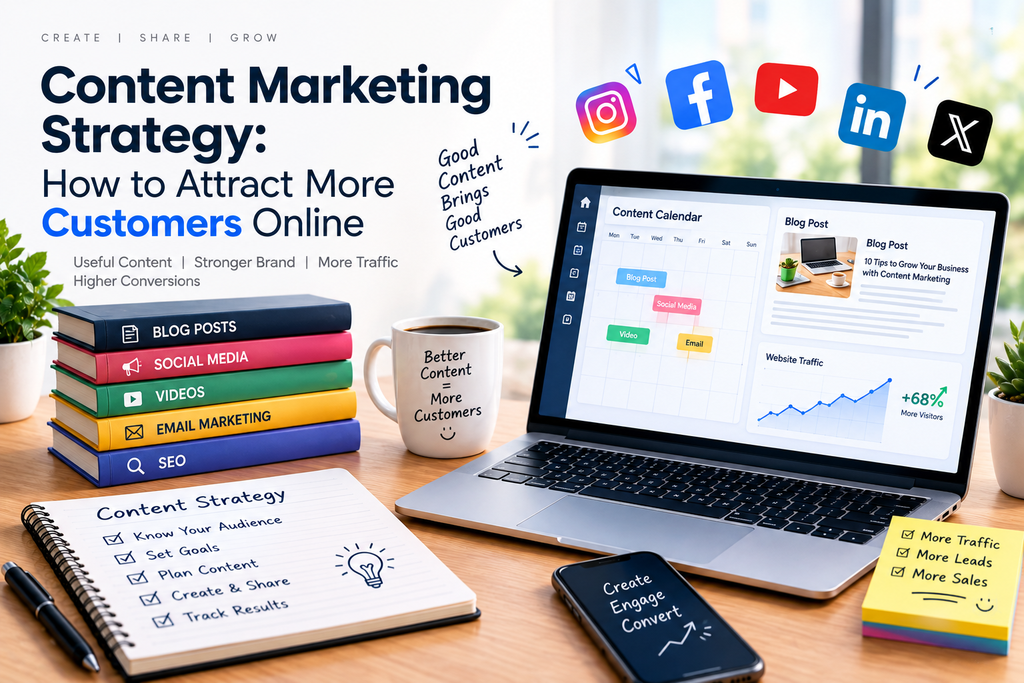
Content Marketing Strategy: How to Attract More Customers Online
In today’s digital world, customers search online for information before choosing a product or service. Businesses that provide useful and engaging content can build trust, answer customer questions, and attract potential buyers. This is where content marketing becomes important.
A well-planned content marketing strategy helps businesses connect with their target audience, improve online visibility, and build long-term relationships with customers.
In this blog, we will explore what content marketing is, why it matters, and how to create a strategy that supports business growth.
What Is Content Marketing?
Content marketing is a digital marketing approach that involves creating and sharing valuable, relevant, and consistent content to attract and engage a specific audience.
Content can include blog posts, social media posts, videos, infographics, email newsletters, and guides.
Instead of only promoting products or services, content marketing focuses on providing helpful information that addresses the audience’s needs and interests.
Why Is Content Marketing Important?
1. Builds Brand Awareness
Publishing useful content helps more people discover your business and understand what your brand offers.
2. Builds Trust and Credibility
When a business consistently shares accurate and helpful information, it can establish itself as a reliable source in its industry.
3. Supports SEO
Well-written, relevant blog posts can help search engines understand your website and connect your pages with appropriate search queries.
4. Attracts Potential Customers
Content that answers customer questions can bring relevant visitors to your website and introduce them to your services.
5. Supports Long-Term Growth
Useful content can continue attracting visitors and helping customers long after it is published, especially when it is maintained and updated.
How to Create an Effective Content Marketing Strategy
Step 1: Understand Your Target Audience
Before creating content, identify who you want to reach. Consider their interests, challenges, questions, and goals.
For example, a digital marketing agency may create content for small business owners who want to improve their social media presence or website traffic.
Step 2: Set Clear Marketing Goals
Decide what you want your content to achieve. Your goals might include increasing website traffic, generating leads, building brand awareness, or improving customer engagement.
Clear goals make it easier to choose the right content and measure results.
Step 3: Choose the Right Content Types
Select content formats that suit your audience and goals.
- Blog posts: Explain topics and answer questions in detail.
- Social media posts: Share tips, updates, and short educational content.
- Videos: Demonstrate products, explain concepts, or answer common questions.
- Infographics: Present information in a simple visual format.
- Email newsletters: Share useful updates and maintain relationships with subscribers.
Step 4: Perform Keyword Research
Keyword research helps you discover the words and phrases people use when searching online.
For example, a business offering digital marketing services might create content around “content marketing for small businesses” or “how to create a content calendar.”
Use relevant keywords naturally. Avoid repeating them excessively just to influence rankings.
Step 5: Create Helpful and Original Content
Your content should answer real questions and provide practical value. Use clear headings, short paragraphs, examples, and actionable advice.
Avoid copying content from other websites. Original content that demonstrates useful knowledge can give readers a reason to return to your website.
Step 6: Create a Content Calendar
A content calendar helps you plan what to publish and when.
For example, you could publish one blog post each week and share related tips on social media between blog updates. Choose a schedule you can maintain consistently.
Step 7: Promote Your Content
Publishing content is only one part of the process. Share relevant articles through your social media channels, email newsletters, and other appropriate platforms.
You can also link related articles together on your website so visitors can discover more useful information.
Step 8: Measure Your Results
Review your performance regularly to understand which content is working.
Useful metrics include website visits, organic search clicks, time spent on pages, social media engagement, newsletter sign-ups, and qualified leads.
Use these insights to improve your future content and focus on what helps your audience most.
Common Content Marketing Mistakes to Avoid
Some businesses struggle because they publish content without a clear plan. Avoid these common mistakes:
- Creating content without understanding the audience.
- Focusing only on promoting products.
- Publishing inconsistently.
- Copying competitors instead of offering original insights.
- Ignoring SEO and content readability.
- Failing to promote published content.
- Not measuring performance or updating outdated information.
A thoughtful strategy helps keep content focused, useful, and aligned with business goals.
Conclusion
Content marketing is an effective way to educate your audience, build trust, improve online visibility, and attract potential customers. By understanding your audience, setting clear goals, creating helpful content, promoting it consistently, and measuring performance, your business can develop a stronger online presence.
Remember, successful content marketing is not about publishing as much as possible. It is about providing the right information to the right audience at the right time.
**Want to grow y